Kanazawa Architecture Tour : Reading the City Through Samurai Planning, Townhouses, and Contemporary Design
Updated: Aug 27

Introduction|Kanazawa Is a City Best Understood Through Its Architecture
Many architecture tours focus on iconic buildings or famous architects.Kanazawa offers a different proposition.
Kanazawa is a city where architecture, streets, and infrastructure form a continuous system shaped by history, climate, and social order. From samurai-era urban planning to machiya townhouses, waterways, and carefully contextual modern architecture, the city reveals itself not through isolated landmarks, but through structure and continuity.
The Kanazawa Architecture Tour is designed as a context-driven walking experience that allows DMCs and land operators to explain why Kanazawa functions as it does today—and why its culture has endured.
■ Table of Contents
Why Kanazawa Is Best Understood Through Architecture
Castle Town Planning and the Logic of the Kaga Domain
Samurai Residential Architecture and Social Order
Machiya Townhouses as Urban Infrastructure
Streets, Curves, and Climate-Responsive Design
Waterways as Invisible Urban Systems
Modern Architecture in Dialogue with History
Tour Structure & Flow (DMC Perspective)
Guest Profile & Best Fit
Why Architecture Tours Add Value to High-End Itineraries
1. Why Kanazawa Is Best Understood Through Architecture
In Kanazawa, architecture is not decoration—it is explanation.
By walking the city, visitors begin to ask:
Why do streets curve rather than run straight?
Why are sightlines intentionally limited?
Why do buildings form continuous streetscapes instead of standing alone?
This tour answers these questions through the lenses of urban planning, social hierarchy, and climate adaptation, allowing guests to read the city as a designed environment rather than a collection of sights.
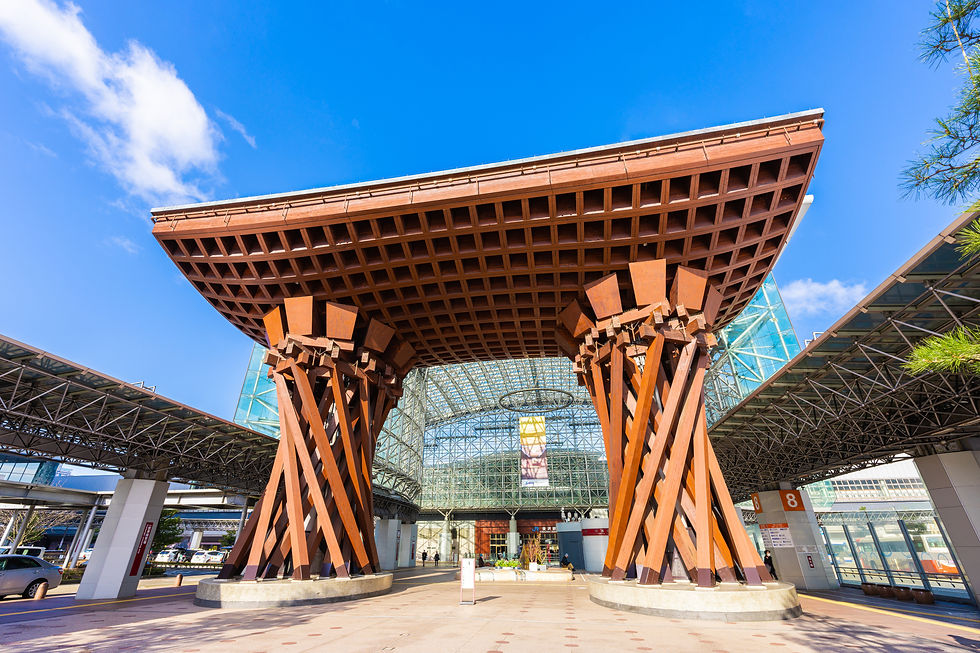
2. Castle Town Planning and the Logic of the Kaga Domain
Kanazawa developed as a carefully planned castle town under the Kaga Domain.
Its urban structure reflects clear principles:
A concentric layout centered on the castle
Deliberate placement of samurai districts, merchant areas, and temples
Circulation routes designed for control, defense, and daily governance
Rather than emphasizing power through monumentality, the Kaga Domain prioritized order, stability, and long-term governance—values embedded in the city’s spatial logic.

3. Samurai Residential Architecture and Social Order
Samurai residences in Kanazawa express a distinct philosophy of authority.
Typical features include:
Low, restrained building profiles
Walls and gates that shield without fully isolating
Inward-facing spaces emphasizing discipline and privacy
These design choices reflect the Kaga Domain’s ideal of power exercised through self-restraint rather than display. Walking through former samurai districts makes this social order visible in built form.

4. Machiya Townhouses as Urban Infrastructure
Machiya townhouses are not simply traditional buildings—they are functional urban infrastructure.
In Kanazawa, machiya historically integrated:
Living space
Commercial activity
Guest reception
Their continuous façades create coherent streetscapes, while their internal flexibility supports adaptation over time. The tour explains why machiya were renovated and reused rather than demolished, contributing to Kanazawa’s long-term urban resilience.

5. Streets, Curves, and Climate-Responsive Design
Kanazawa’s streets rarely follow straight lines.
This is a deliberate response to:
Heavy snow and seasonal winds
Security and sightline control
Pedestrian-scale movement
By examining street geometry on foot, guests understand how climate and social needs shaped a city optimized for comfort and safety long before modern urban planning terminology existed.

6. Waterways as Invisible Urban Systems
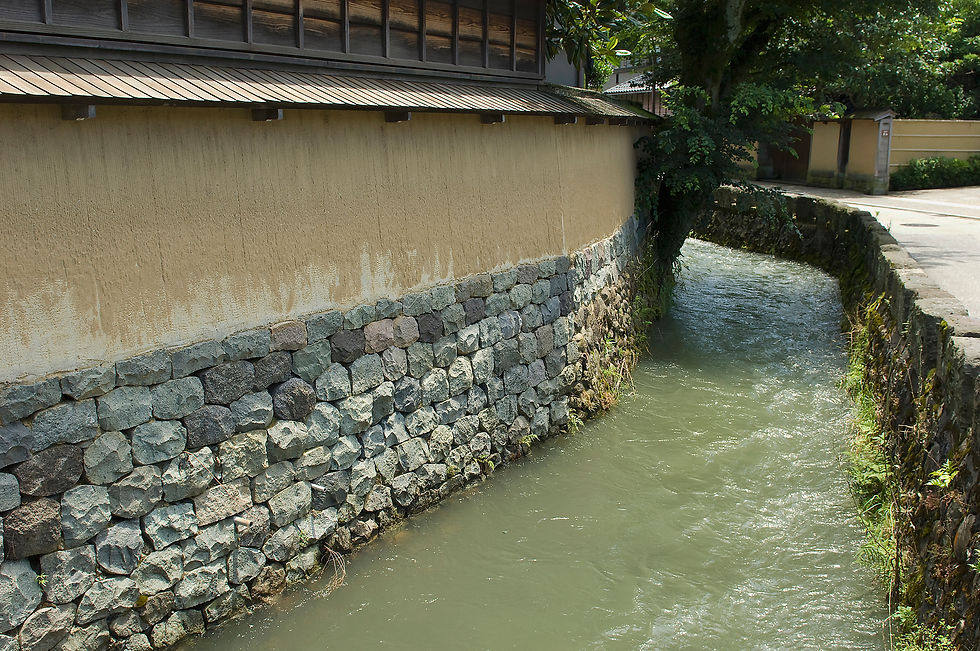
Kanazawa is supported by an extensive network of canals and waterways that often go unnoticed.
Historically, these systems served multiple functions:
Fire prevention
Daily household use
Support for craft industries such as dyeing and lacquer
These waterways represent an early form of multi-functional urban infrastructure, contributing to sustainability and resilience—key themes in the tour.
7. Modern Architecture in Dialogue with History
Kanazawa is also internationally recognized for its contemporary architecture.
What distinguishes the city is not the presence of modern buildings, but how they coexist with historical context:
Respect for scale and streetscape
Sensitivity to movement and public flow
Continuity rather than contrast
The tour places modern architecture within the historical logic of the city, showing evolution rather than disruption.

8. Tour Structure & Flow (DMC Perspective)
Typical duration: 90–120 minutes
Structure includes:
Overview of castle town planning
On-site explanation in samurai and merchant districts
Analysis of machiya streetscapes, waterways, and street design
Contextual discussion of modern architecture
Time for questions and discussion
✔ Fully walkable✔ Weather-resilient✔ Small-group friendly
Designed for operational stability and repeatability.

9. Guest Profile & Best Fit
his tour is particularly well suited for:
Culturally motivated FITs and small groups
Architects, designers, and urban planning professionals
Educational and study tours
Repeat visitors to Japan
It is most effective when guests have already seen major sights and seek deeper understanding.
10. Why Architecture Tours Add Value to High-End Itineraries
Architecture tours increase value without increasing volume.
They:
Give meaning to subsequent city walks
Provide context for food, craft, and tea experiences
Turn the city itself into a learning environment
For high-end itineraries, this results in greater coherence, intellectual satisfaction, and lasting impact—without adding logistical complexity.
Conclusion
The Kanazawa Architecture Tour is not about viewing buildings.It is about reading a city.
By understanding how Kanazawa was designed—and why those designs still work—guests gain insight into how culture, governance, and daily life have been sustained here for centuries.
In Kanazawa, architecture does not stand apart from life.It quietly explains it.


