Local Experiences in Kanazawa, Japan: Understanding Everyday Life Beyond Sightseeing
- Jan 18
- 3 min read

Introduction
When travelers search for local experiences in Japan, they often imagine activities hidden from guidebooks or places untouched by tourism.In Kanazawa, the idea of “local” is more subtle.
Kanazawa’s everyday life is not something separate from its culture—it is the culture. The city’s neighborhoods, markets, workshops, and seasonal routines have continued largely unchanged because Kanazawa avoided wartime destruction and modern overdevelopment. As a result, daily life remains visible.
Experiencing Kanazawa locally does not mean entering private spaces or disrupting routines. It means learning how to observe, understand, and respect the rhythms that residents live by every day.
■ Table of Contents
What “Local Experience” Means in Kanazawa
Why Kanazawa’s Daily Life Is Still Visible
Neighborhoods as the Foundation of Local Culture
Small-Scale Commerce and Long-Term Relationships
Daily Life Shaped by Season and Climate
Crafts and Culture Embedded in Ordinary Places
How Visitors Can Experience Kanazawa Respectfully
Who These Local Experiences Are Best For
Why Everyday Life Leaves the Strongest Impression
1. What “Local Experience” Means in Kanazawa
In Kanazawa, local experiences are not packaged activities. They are perspectives.
They involve:
Seeing how residents move through the city
Noticing how shops open, close, and interact
Understanding how time, season, and place influence behavior
Rather than asking “What can I do?”, a local experience begins by asking “How is life lived here?”

2. Why Kanazawa’s Daily Life Is Still Visible
Kanazawa’s urban fabric remained intact through the 20th century. Large-scale redevelopment was limited, and traditional districts continued to function as residential and working areas.
According to information shared by the city and the local tourism authorities, this continuity allows visitors to observe:
Mixed-use neighborhoods where people live and work
Streets that serve residents before visitors
Cultural practices that were never relocated into museums
Daily life did not retreat behind closed doors—it stayed on the street.
3. Neighborhoods as the Foundation of Local Culture
Kanazawa is a city of neighborhoods rather than zones.
Residential districts close to the city center still feature:
Small shrines integrated into daily routes
Community notice boards
Local bathhouses, bakeries, and workshops
Walking through these areas reveals how culture is maintained not through events, but through repetition and familiarity.

4. Small-Scale Commerce and Long-Term Relationships
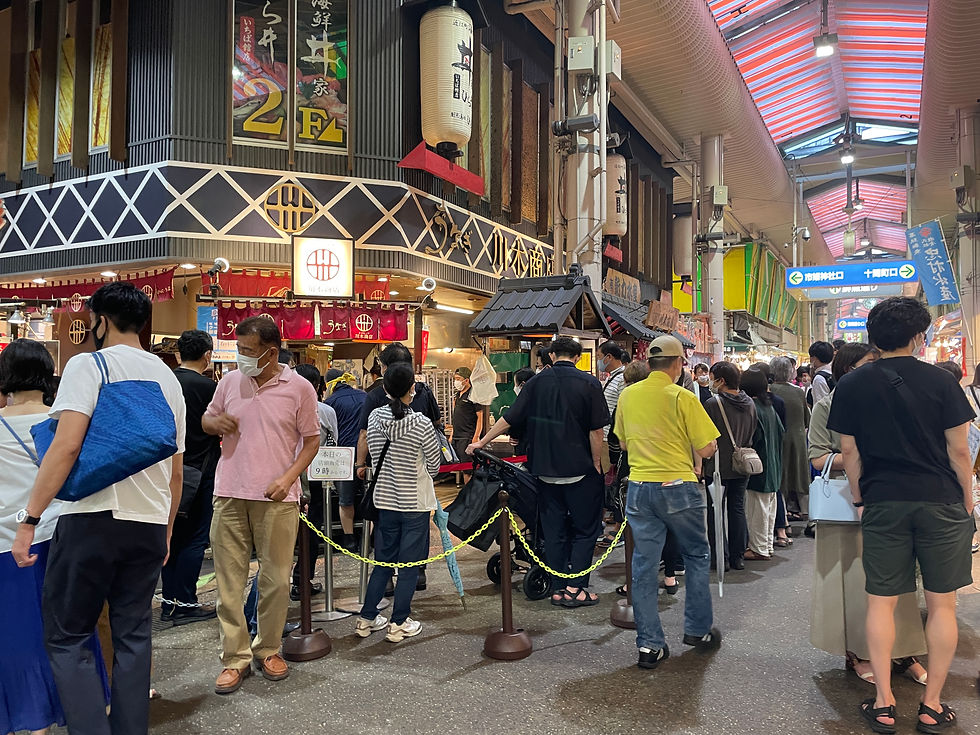
Local shops in Kanazawa are sustained by relationships, not volume.
Greengrocers, fishmongers, confectioners, and craft shops often serve the same families for generations. Conversations matter. Advice is shared freely. Trust replaces efficiency.
For visitors, observing these interactions offers insight into how commerce supports community rather than replacing it.

5. Daily Life Shaped by Season and Climate
Kanazawa’s climate—marked by heavy rain and snow—strongly influences everyday routines.
Seasonality appears in:
Clothing choices
Shop displays
Food preparation
Opening hours and daily schedules
Local experiences change dramatically with the time of year. Understanding this helps visitors appreciate why Kanazawa’s culture feels grounded and responsive to nature.

6. Crafts and Culture Embedded in Ordinary Places
Unlike cities where crafts are confined to designated districts, Kanazawa’s artisans often work within residential areas.
Studios, workshops, and family-run businesses exist alongside homes, schools, and shops. Craft culture is therefore encountered naturally—through sound, movement, and materials—rather than as a special excursion.
This integration reinforces the idea that culture is part of everyday work.

7. How Visitors Can Experience Kanazawa Respectfully
Meaningful local experiences depend on how visitors behave.
Recommended approaches include:
Walking rather than rushing
Limiting photography in residential areas
Observing before interacting
Joining guided experiences that provide context
Respecting boundaries ensures that daily life remains comfortable for residents and accessible for future visitors.

8. Who These Local Experiences Are Best For
Local experiences in Kanazawa are especially rewarding for travelers who:
Seek understanding over novelty
Prefer calm, walkable cities
Are interested in daily life and social structure
Have visited Japan before and want deeper insight
They are also well suited to educators, writers, designers, and culturally curious travelers.

9.Why Everyday Life Leaves the Strongest Impression
Many travelers remember landmarks, but few remember how a city felt.
In Kanazawa, it is often the ordinary moments—a greeting exchanged, a shop opening its shutters, snow falling on a quiet street—that leave the deepest impression.
These moments reveal values: attentiveness, restraint, continuity, and care.
Conclusion
Local experiences in Kanazawa are not about accessing hidden places.They are about developing cultural awareness.
By observing daily life with patience and respect, visitors gain insight into how this city has preserved its character—not through isolation, but through continuity.
Kanazawa’s everyday life does not ask to be consumed.It asks to be understood.


